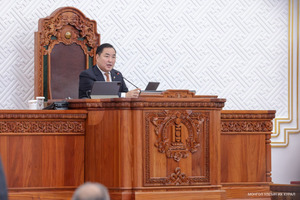
Шүүгч М.Нямжаргал ОХУ-д зохион байгуулагдаж буй олон улсын тэмцээний шүүгчээр ажиллаж байна
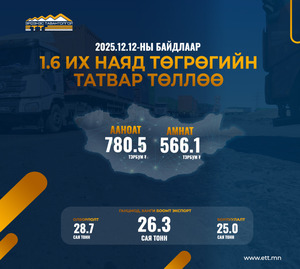
“Цагаан алт” хөтөлбөрийн дүнд түүхий эдийн 70 орчим хувийг дотоодын үйлдвэрлэгчид бэлтгэлээ
НИТХ-ын зөвлөлийн хуралдаанаар нийслэлийг 2026-2030 онд хөгжүүлэх таван жилийн төлөвлөгөөг хэлэлцлээ
Монгол Улсын Их Хурлын чуулганы хуралдааны дэгийн тухай хуульд нэмэлт, өөрчлөлт оруулах тухай хуулийн төслийг өргөн мэдүүлэв
Хяналтын болон бүтээмжийн менежер, сайд нарын зөвлөхүүдийг цомхотгож, дэд сайд нарыг томиллоо
Шадар сайд Х.Ганхуягаар ахлуулсан ажлын хэсэг "Алтанбулаг" чөлөөт бүсэд ажиллалаа
Дампуурсан банкуудад байршиж байсан төрийн өмчийн хөрөнгүүдийг буцаан төвлөрүүлэх ажлын хэсгийн явцтай танилцана
МАН-ын Удирдах зөвлөлөөр дэд сайд сайд нар тодорно
Нийслэлийн ИТХ-ын дарга А.Баяр Цагдаагийн ерөнхий газарт ажиллав
ЭЗБХ: С.Наранцогтыг Монголбанкны Ерөнхийлөгчийн албан тушаалд томилохыг дэмжив
Buddhism in Mongolia
Although Buddhism first arrived in Mongolia as early as 2nd century BC, it became widespread later in the 16th centuryand since then has been the main religion in the country.
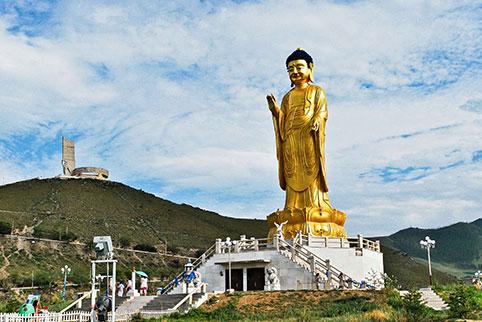
Undur Gegeen Zanabazar (High Saint Zanabazar), the historic enlightener of Mongolia, spread Buddhism in Mongolia. Mongolian costumes, ritual instruments, methods for makingstatues of gods, and the composition of chants stand out from other Buddhist countries. For instance, Mongolian mantras are styled differently from Tibetan mantras, and their harmonies sound like Mongolian folk songs with beautiful
melodies.
In the 17th century, the peak period of Buddhism in Mongolia, the nomadic and Buddhist schools of medicine were brought together to create great advancement. This
period in time is called the “Golden Era” in the history of Mongolian science of medicine.
Buddhism in Mongolia has attained its own unique characteristics, adopting an original way of thinking and therich traditions of nomads to be identified as “Mongolian.”
Modern day Mongolians exhibit great religious tolerance, too.
It may be because they consider religious beliefs and doctrines as wisdom, and they have deep respect towardsany source of knowledge and wisdom. Mongolians can always find something in common with other religions or spiritual beliefs and their own ideology.
Undur Gegeen Zanabazar (High Saint Zanabazar), the historic enlightener of Mongolia, spread Buddhism in Mongolia. Mongolian costumes, ritual instruments, methods for makingstatues of gods, and the composition of chants stand out from other Buddhist countries. For instance, Mongolian mantras are styled differently from Tibetan mantras, and their harmonies sound like Mongolian folk songs with beautiful
melodies.
In the 17th century, the peak period of Buddhism in Mongolia, the nomadic and Buddhist schools of medicine were brought together to create great advancement. This
period in time is called the “Golden Era” in the history of Mongolian science of medicine.
Buddhism in Mongolia has attained its own unique characteristics, adopting an original way of thinking and therich traditions of nomads to be identified as “Mongolian.”
Modern day Mongolians exhibit great religious tolerance, too.
It may be because they consider religious beliefs and doctrines as wisdom, and they have deep respect towardsany source of knowledge and wisdom. Mongolians can always find something in common with other religions or spiritual beliefs and their own ideology.
0 Сэтгэгдэл